
i found this amazing book titled, woman at point zero written by Nawal El Saadawi who is an internationally renowned writer and around the 1970s had the opportunity of speaking to a woman, Firdaus, who was on death roll for killing her husband but refused to talk to anyone about it or even beg for presidential pardon. Suddenly the day before she is executed, she decides to open up.
Prior to this the author has never stepped into a prison but little did she know that just merely a decade later she would be imprisoned in the same prison she was visiting at this time to see Firdaus for criticizing the then president and was only released a year after his assassination.
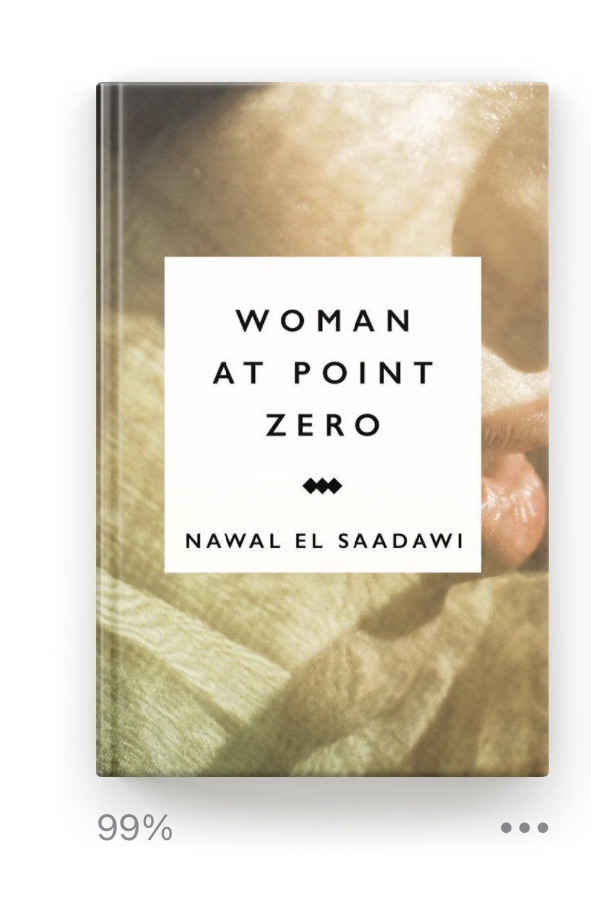
i had already read the silent patient which is a fictional book with a similar theme of a wife killing her husband but in this book, woman at point zero, the element of fiction was lost. Firdaus was a real woman who had killed her husband and i went into this book thinking one thing, in a world where marriage is painted as the epitome of a woman’s life, what on God’s earth would make a woman kill her husband?
There will be spoilers so feel free to pause here and pick up the book if you’d like as it contains some very heavy themes.
First, i like what i’d call a ‘no-nonsense approach’ taken to write the book. no heightened suspense or exaggerations to give the story any needed flair. quite similar to the book, an autobiography titled Man’s Search for Meaning by Viktor Frankl written by a former prisoner of war camp in world war 2 which presented the gruesome reality of war as it is. this could be due to the fact that the story itself already has a lot of heavy themes and any further theatrics could potentially water this down.
Now unto Fridaus story. i was curious as to her name and what it could mean so i searched it up and found that it meant paradise or garden of eden. Firdaus is a significant name, referring to the highest level of paradise in the afterlife. The name is often found in Islamic literature and poetry, symbolizing beauty, peace, and divine grace.
Fridaus was a remarkable woman in my opinion, one who society failed from the moment she was born as all she had known was suffering and pain be it at the hands of her father, uncle, mother, first love and even later her husband. her father was a man who did not care for his children and would rather he eat at the expense of them having to starve for dinner. he was one to take up the warmest room at night and leave his kids to the cold. her mother was no different she only cared for her husband and despite the beatings she suffered at his hands and losing her kids from her neglect of them, she stayed. at the start of the book, i could not fathom why any woman would put up with this. i was frustrated with her character and kept thinking, why won’t she just leave? but by the end of the book my question had shifted to, where would she have gone?
as both the mother who stayed and the daughter who left, misery was sure to reside with both.
Firdaus had an uncle who was a scholar and as at the time this was a privilege only reserved for men so he would often come around and teach her the alphabets but not without molesting her which i do not believe a young girl like her really understood what was going on as at that time, her first love in the fields had done the same to her. it is unclear whether her mother was aware of these incidents but regardless she had decided to mutilate Firdaus’s genitalia.
Not longer after she moves in with her uncle upon the death of her parents who continued to use her for his pleasure until he married a wealthy and higher status woman and sent firdaus off to an all girl boarding school. I don’t think her uncle loved his wife but he feared her and in my opinion that was better as this meant he could not mistreat her because her family was dignified by society as this was as close to comfort any woman in this story got.
The very reason patriarchy proves detrimental is it hinges on the benevolence of a good man to be palpable, in the same manner tyranny hinges on the benevolence of a good leader to be institutionalized but rarely is a good man found if such amount of power is placed in one.
Firdaus experiences love only twice in her life, the first to her teacher, Miss Iqbal, and both times she describes them with the same fondness. and the second time to a man she met at work later in life but both times this love was not reciprocated.
She graduates from an all girl secondary school second in her class and seventh in the country receiving an award but her family is not by her side to celebrate and on arrival at her uncle’s house, she is to be married to a widower in his 60s and she is just 19. Her uncle refuses to send her to the university for fear that she attends school with boys and her aunt wants her out of the house.
Hearing this she runs out the house only to return at night as in a patriarchal society is there any place truly safe for a woman?
She is then married to this old man with a face deformity where in blood and puss leaking out of it who rapes her countless times and continues to beat her. She runs back to her uncle’s but is brought back merely hours later condemned to the same fate.
With her secondary certificate in hand she sets out to find a job, the same reason she ran from home the first time. She it’s taken in by a man, Bayoumi who runs a cafe and seems to be nice to her until she chooses to go out to look for a job which displeases him.
As the independence of a woman threatens a patriarchal system, for without money what else would make a woman rely on a man?
He takes to beating her regularly, raping her, locking her indoors and even sometimes bringing his friends over to rape her.
She is able to escape him and runs into a woman who is a prostitute and does very well for herself so firduas assumes the same trade. She soon leaves this woman and sets out on her own. She would dictate her price and no price was ever too high to be demanded. Life was comfortable for her and she felt no pain nor pleasure from her activities with men. She would often refuse men who would just offer more and more money for we all know a man can never handle rejection well. she typically charged 20 pounds and even went as far as 3,000 pounds.
Although she tried to leave this trade in search of more honorable work she found herself back at point zero. It didn’t matter what she did, neither men nor the society which she found herself in ever changed.
Every woman is a prostitute of sort but the price differed and the highest rewarding prostitute was the woman who knew she was a prostitute and would ask for the highest price. Men do not know a woman’s value and a woman’s value was anything she said it was and Firduas made sure to set the terms.
Her days as a prostitute seemed to be her happiest, she had food, she had shelter and she had time. Seconded by her time spent in prison.
I’ve never understood the disdain for sex work in society and not the same disdain for men who patronize sex workers. It is a demand and supply industry. but who got the shame? women. often enough, firdaus would come across noble men who wanted to rescue her from her lifestyle which i found ironical. They patronized sex workers but saw themselves as honorable while the prostitute was dishonorable in her profession. if their morals weren’t quick sand and could actually be stood on shouldn’t they avoid all sex workers?? but this logic falls short on them as all the men are corrupt from the religious leaders to the police officers to the men in the family to the average man who walks the street. sexual indiscipline takes a new form in men but it is not addressed as such. society treats a man’s sexual desire with utmost importance, he cannot be himself when he is turned on rather he turns into this savage beast who must be satisfied that is why rape is so often debated more than any other crime out there. the earth must stop spinning at the moment a man wants to sleep with something, anything really. but in training our daughters and spearing our sons, we contradict ourselves but we don’t care. a daughter is taught that virginity, a social construct, is the determination of her value but a son can sleep with the nation’s population and still be venerated. isn’t that why we are constantly reminded that rahab, a mere harlot, was used by God but solomon a wise king, with a league of over a 1,000 women was chosen by God. do you see the choice of language used when referring to both. one is always reduced to her status, another is elevated for it but i digress.
Fridaus eventually runs into a stubborn pimp who refuses to let her go and wants to marry her while taking a share of her earnings and despite all her efforts to avoid him, he proves to have connections with every person of importance politically or otherwise. he does marry her and once again, Firdaus is a slave but she refuses for this to be so. She picks up her secondary school certificate, the one that had once gotten her an office job once where the reality of prostitution was still prevalent as men would trade in sex for supposed assistance to women, and tries to run away. But her pimp doesn’t let her and in the struggle that ensues, she brutally murders him. but who could blame her?
Has she not been through enough??
Even though she has just killed a man, she walks down the street a free woman and chooses to go on a leisurely stroll where she runs into another client, an arab prince who pays her 3,000 pounds for a night with him. She opens up to him about having killed a man and waits for the police to arrive. Again one might ask, why not leave or run away? but to that i ask, to where?
She has spent all her life running and how far had she gotten?? how far can she truly run before another man reaches her and eventually traps her, all the men were the same be it her father, uncle, husband, pimp .. it didn’t matter.
For a woman in a patriarchal society, no where is truly safe.
She’s arrested and sentenced to death but she longer fears death and bids her time, she has lived and there was nothing more that she wanted. Her murder wasn’t why she was killed after all people are murdered everyday, it was for her truth and her defiance of the system that could not make her bow her head for which she was punished.

 Write_rspace